



Syriac monastery between past and present
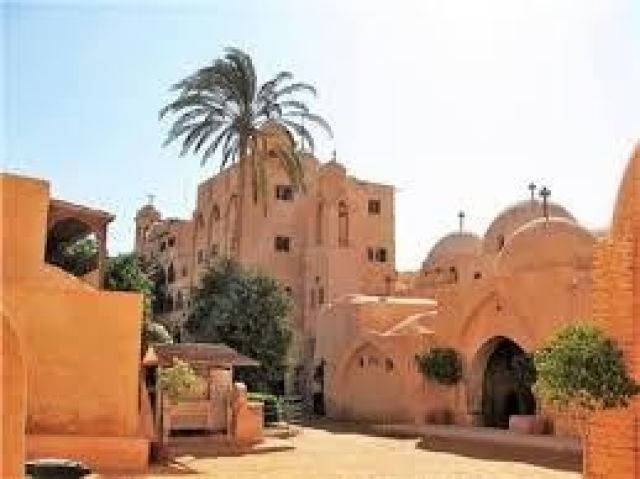
It is one of the four inhabited monasteries remaining until now in Wadi Al-Natrun in the Western Desert of Egypt, and it is fourteen kilometers from the Rest House on the Cairo-Alexandria Desert Road, and it is also only a few meters away from the Monastery of Anba Bishoy, and the monastery resembles Noah's Ark.
Origin and history of the monastery:
This monastery was found in the sixth century A.D. and was first called “The Lady of Anba Bishoy,” as some monasteries with a dual name had arisen at a time of doctrinal controversy on the subject of Theotokos - meaning the Mother of God - the monks determined to honor her as the Mother of God, so they established next to every major monastery a church and subordinate cells In the name of “The Virgin Mary, the Mother of God” and for this reason the monastery was called “The Monastery of Our Lady of Saint Bishoy or Our Lady of Saint Bishoy”
Almost later, in the late eighth century, some Syriac monks belonged to the monastery. If the custom was for the monasteries of Egypt to receive monks and ascetics from all parts of the world, it is the cradle of monasticism and its original source .. And the Syriac monks remained in the monastery until the sixteenth century. That is why the monastery was called: Monastery of the Virgin Mary - Syriac
With the destruction of some monasteries near the monastery in Wadi al-Natrun in the fourteenth century .. The monks of the monastery of Anba Yenis Kama, the priest whose ruins are 3 kilometers southeast of the Syriac Monastery, were forced to seek refuge in the Syriac Monastery, carrying with them the remains of the saint Anba Yhans Kama. The Coptic monks remained alongside the Syriac monks In the monastery and until the Coptic monks lived in the monastery altogether from the seventeenth century until now, and with this the monastery was sometimes called “The Monastery of the Virgin and Anba Yhans Kama - the Syrians” and it is called the Monastery of the Syrians for short.
Monastery features
Door and fences:
The main door opening is located on the northern side of the monastery and the monastery walls are considered from the top of the monasteries of the wilderness. They are three times as long as the dimensions of Noah’s Ark exactly and they are from the ninth century AD and their thickness ranges between 2-3 meters.
1- The fortress:
It was built in the middle of the ninth century AD and is also considered the highest forts of the monasteries in Wadi Al-Natrun, as it consists of four floors, unlike the usual practice (three floors). It opens its door on the second floor and reaches it with an arch of wood that rests on one end of the fortress door and the other on a building opposite to the stairs then It rises if necessary with iron chains
Tell Basta, the most important capital of ancient Egypt, in your hands